Mask on -Venice Carnival
"a labyrinth... where faces are hidden but desires laid bare" - Casanova
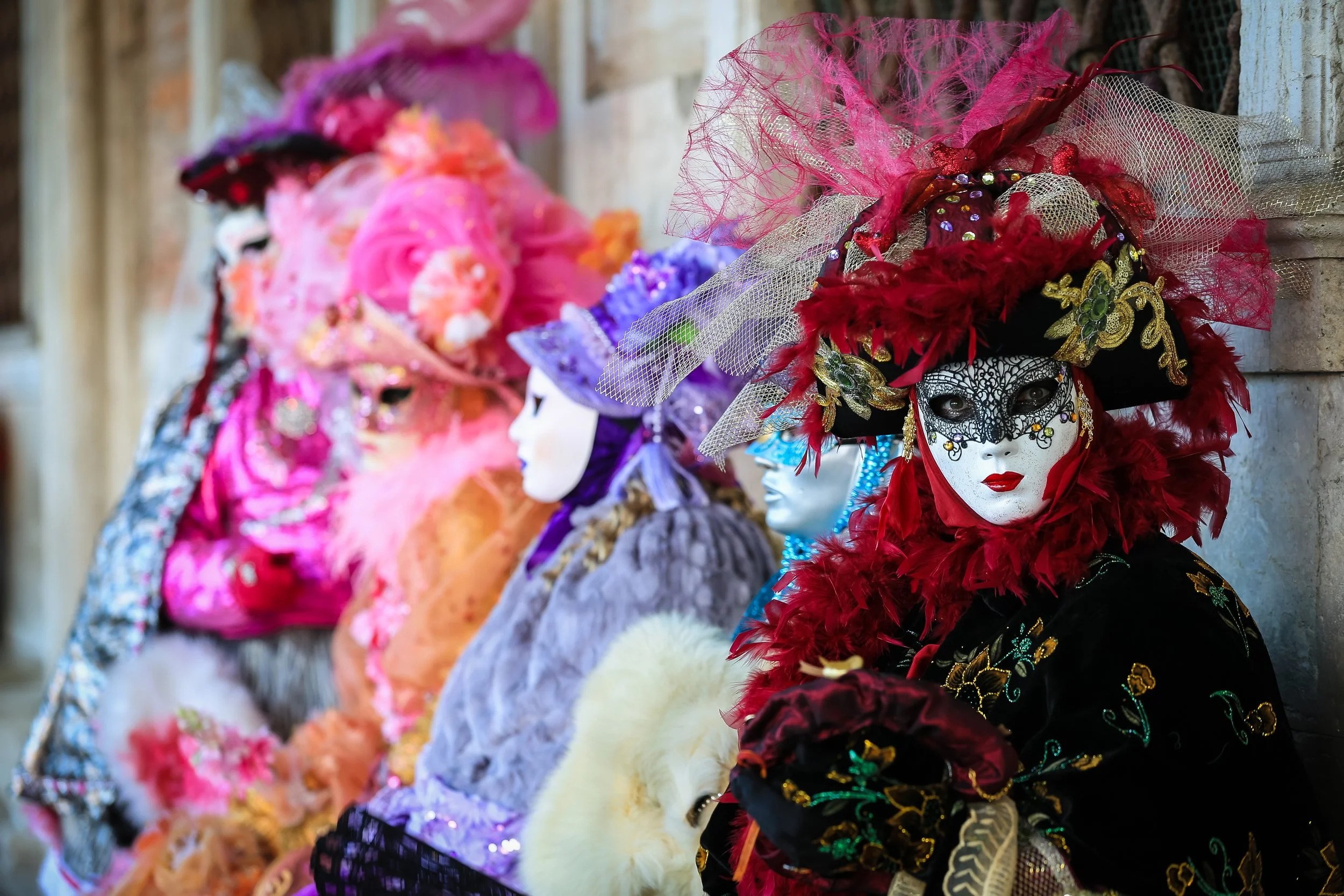
Venice Carnival … For such a long time on my list and finally made it. It is a festival of colours and the most amazing costumed set in one of the most beautiful and romantic cities in the world.
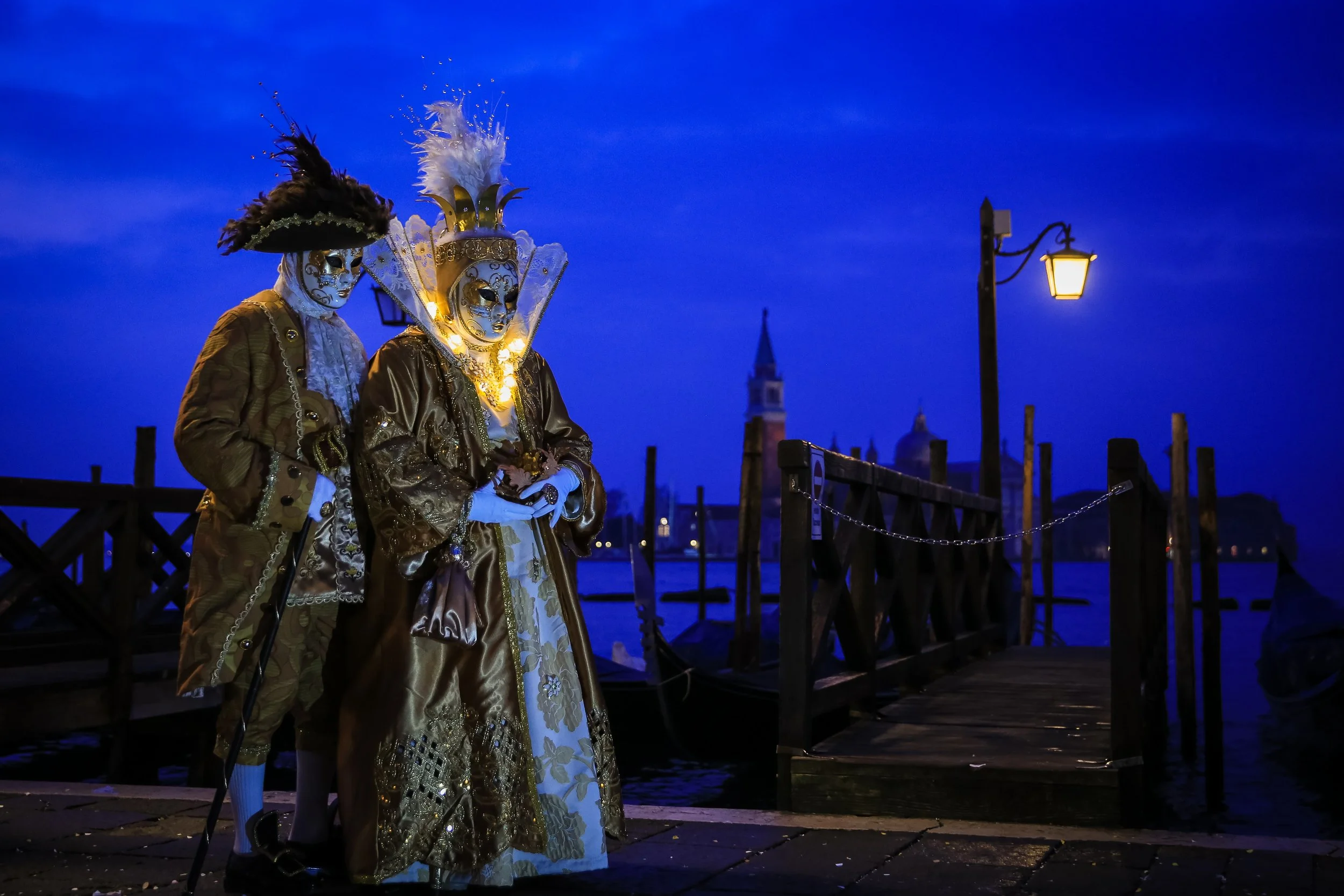
The spectacle starts before sunset. Heading up to St Marks Square, so many photographers and people in costumes.
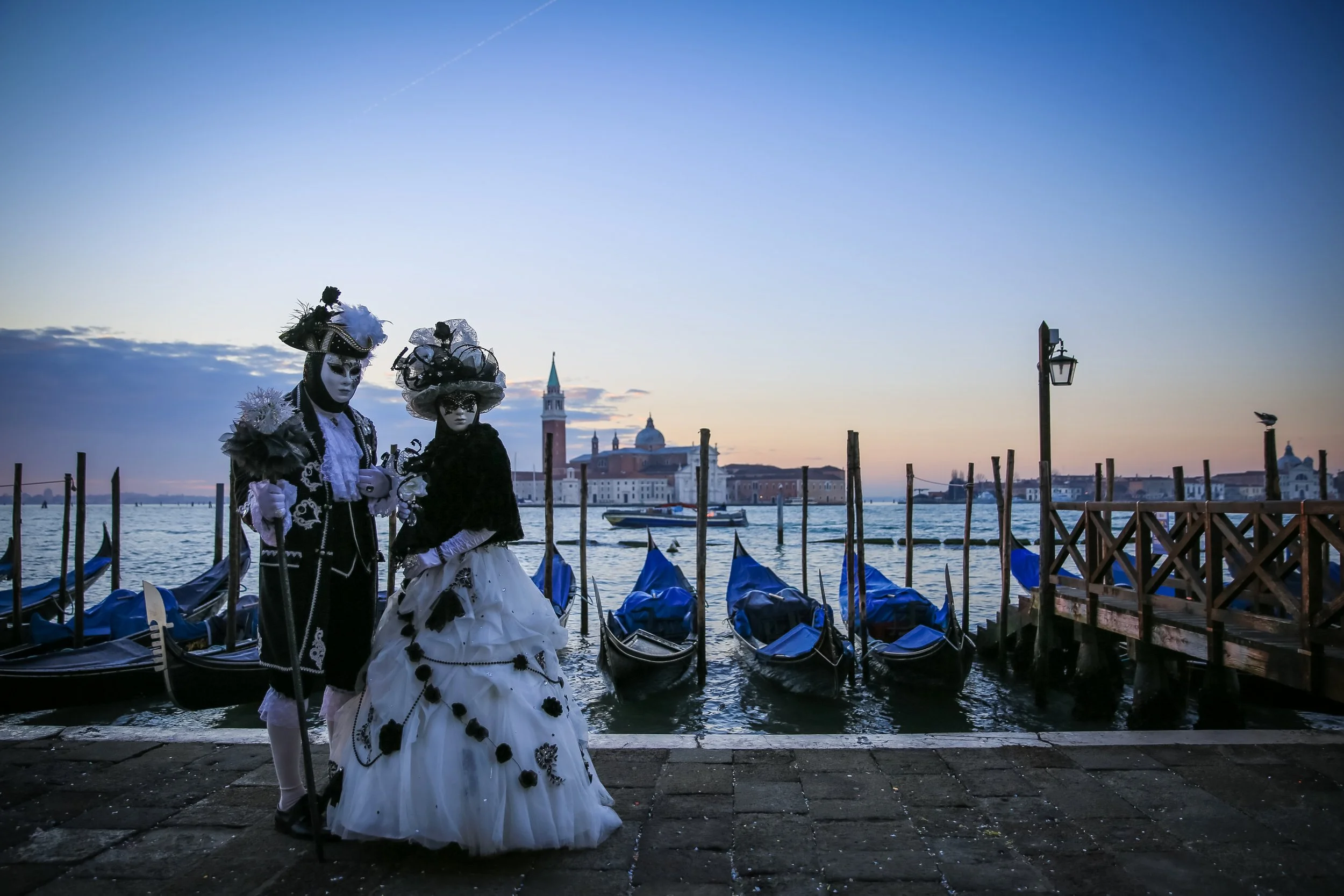
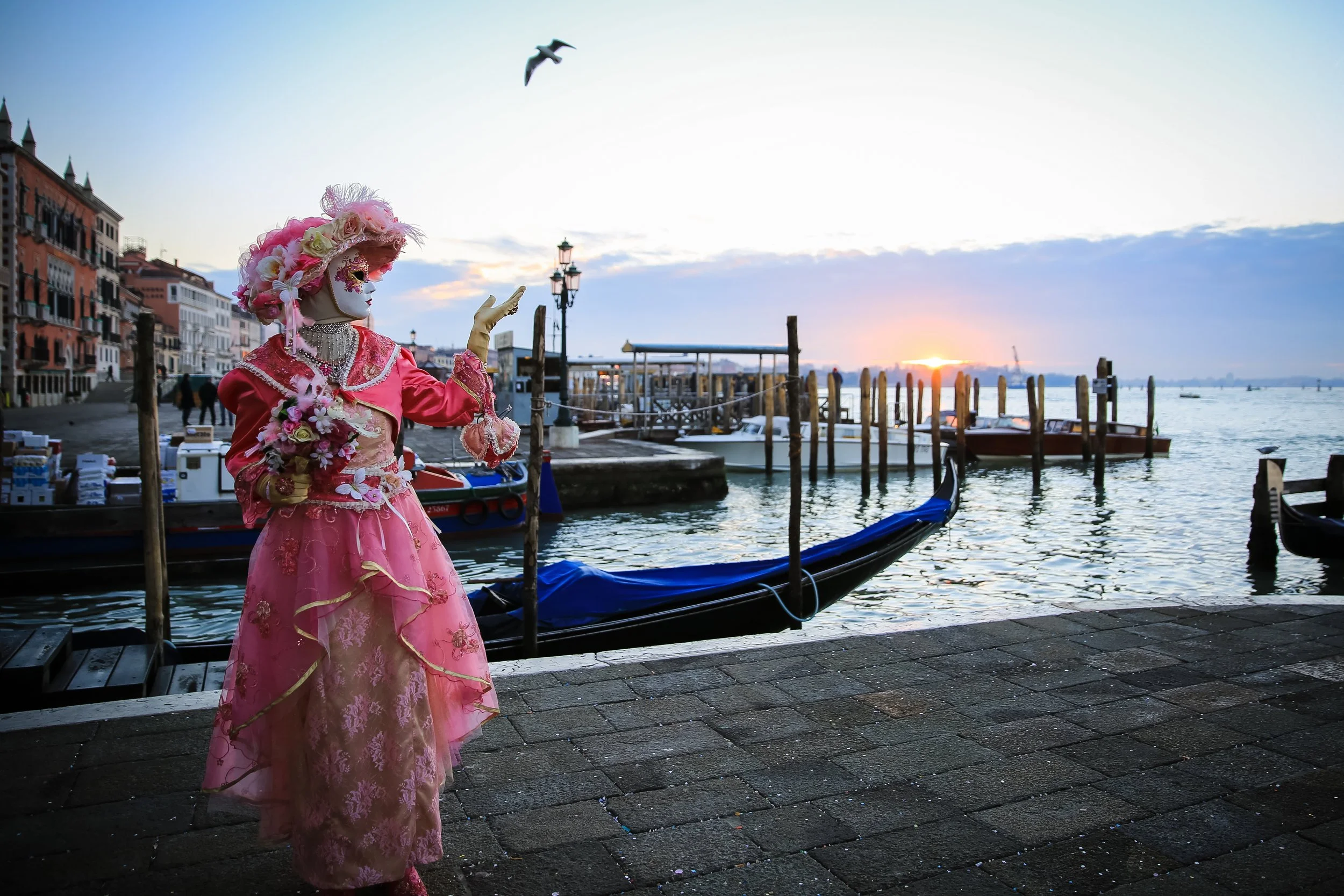
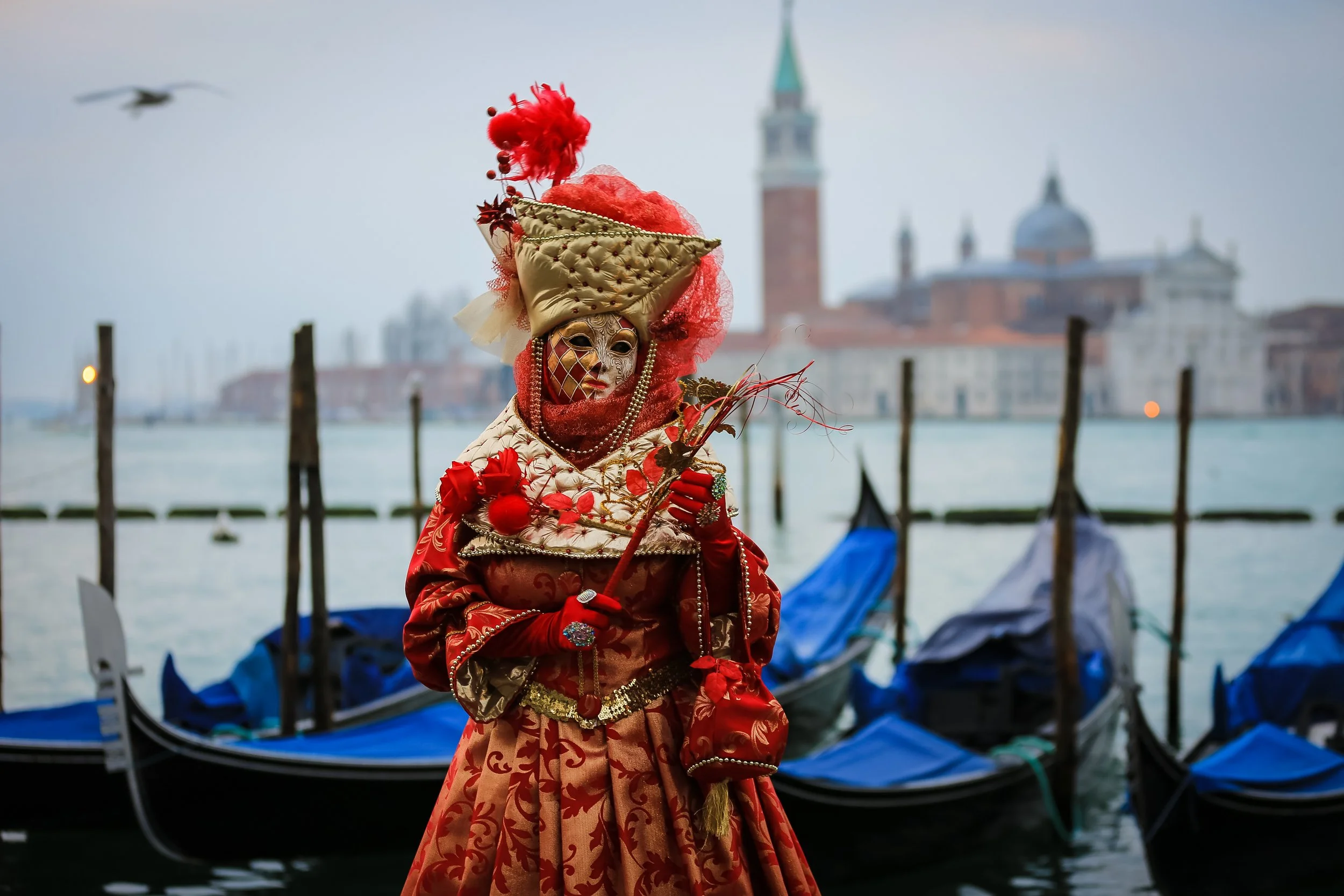
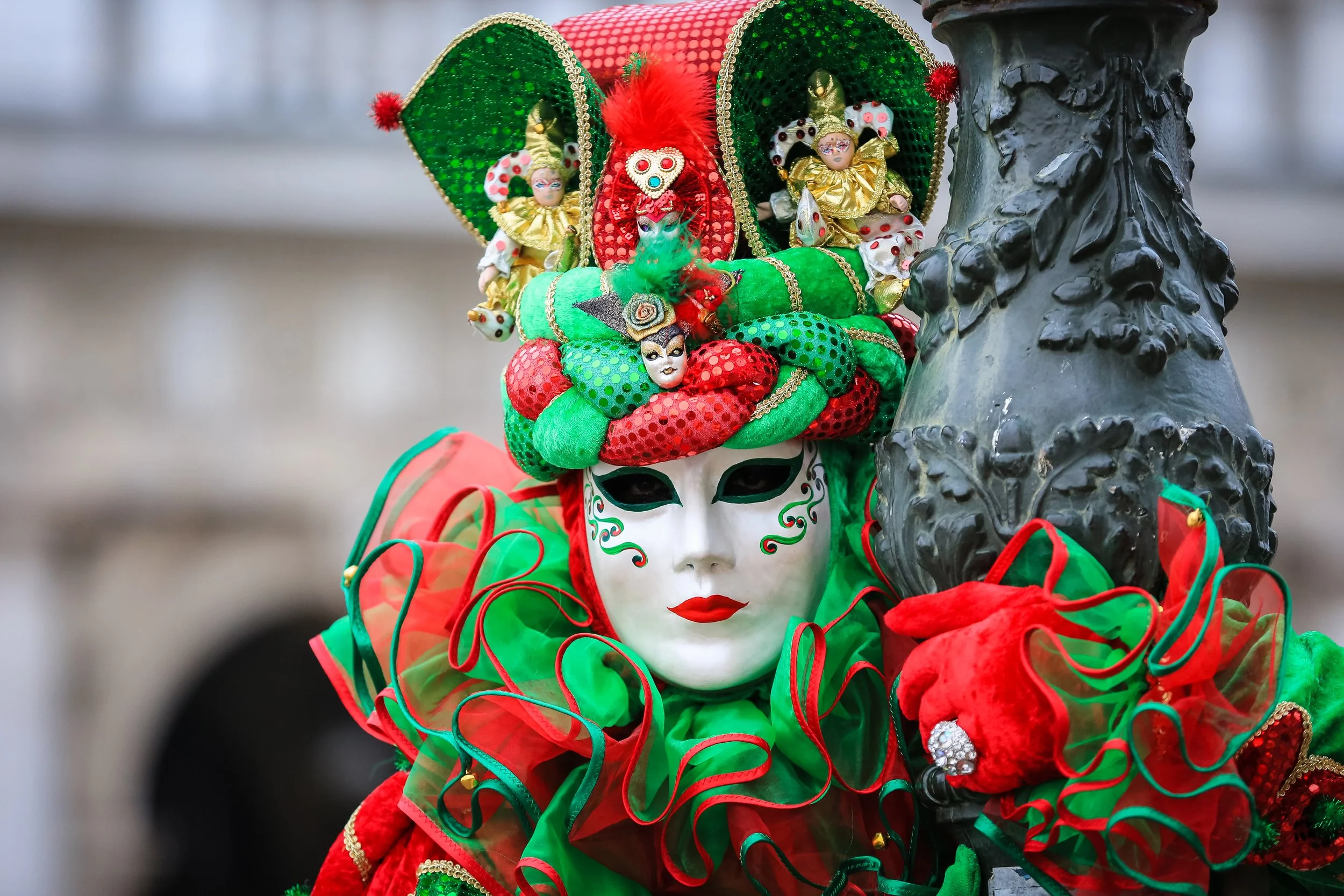
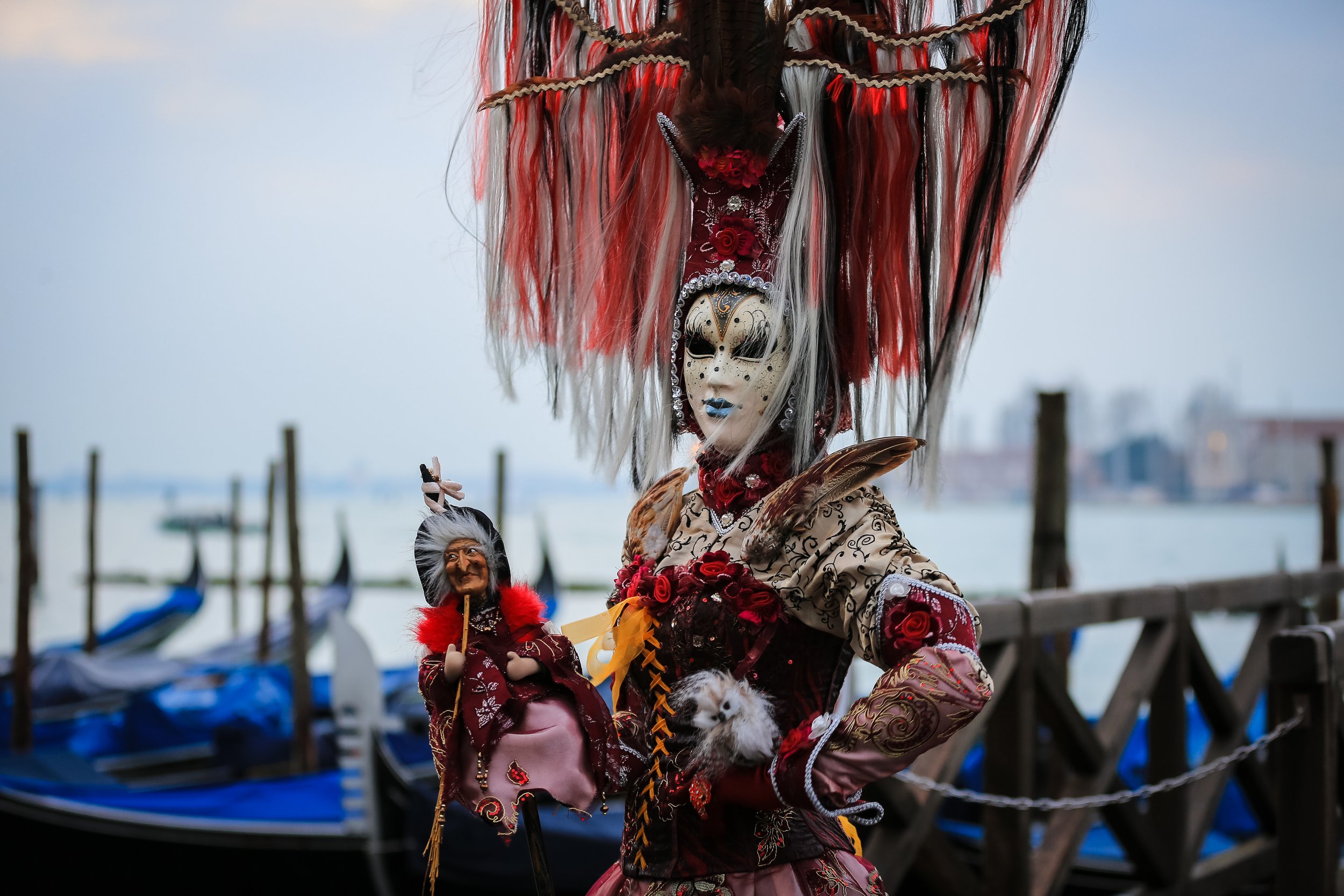
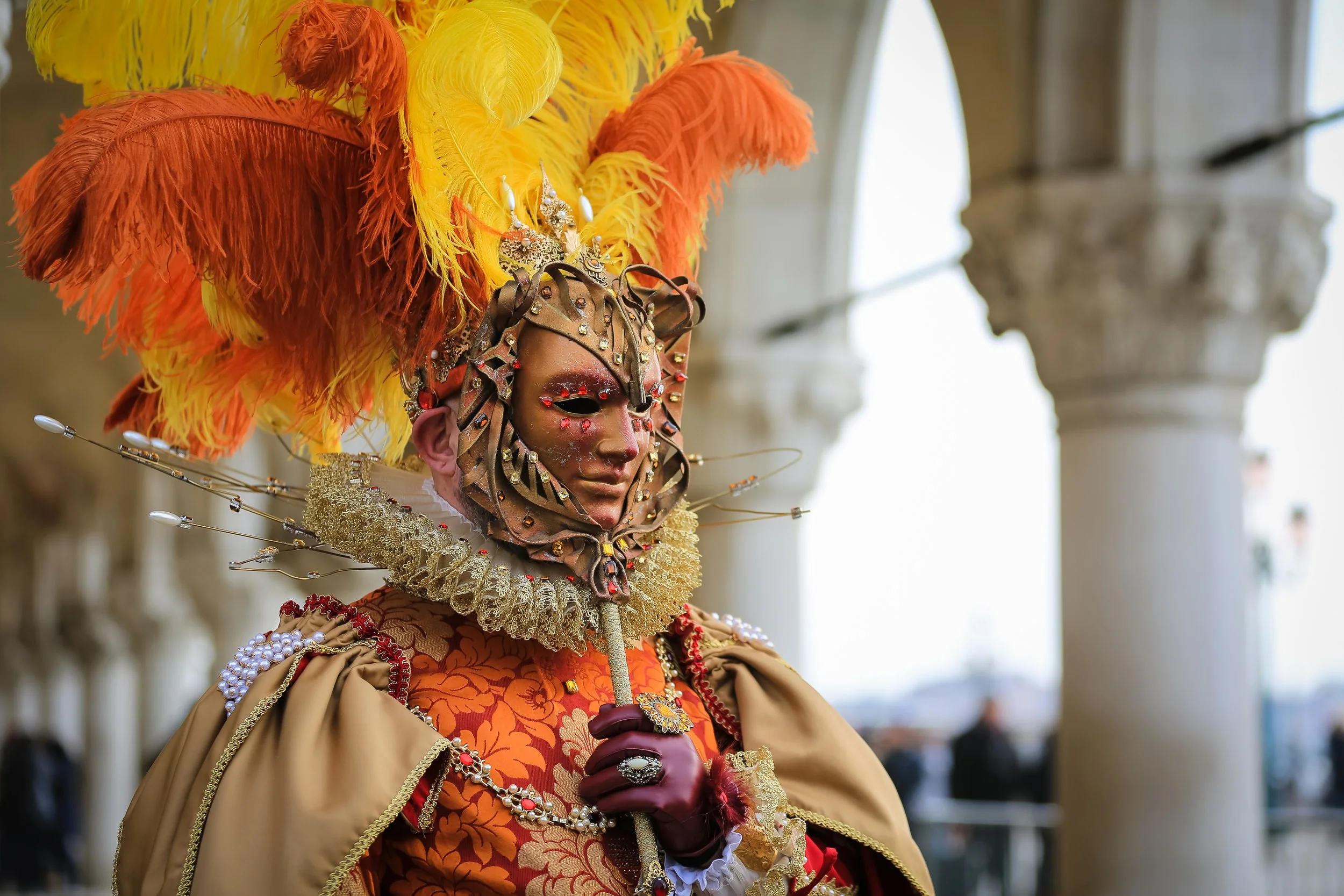
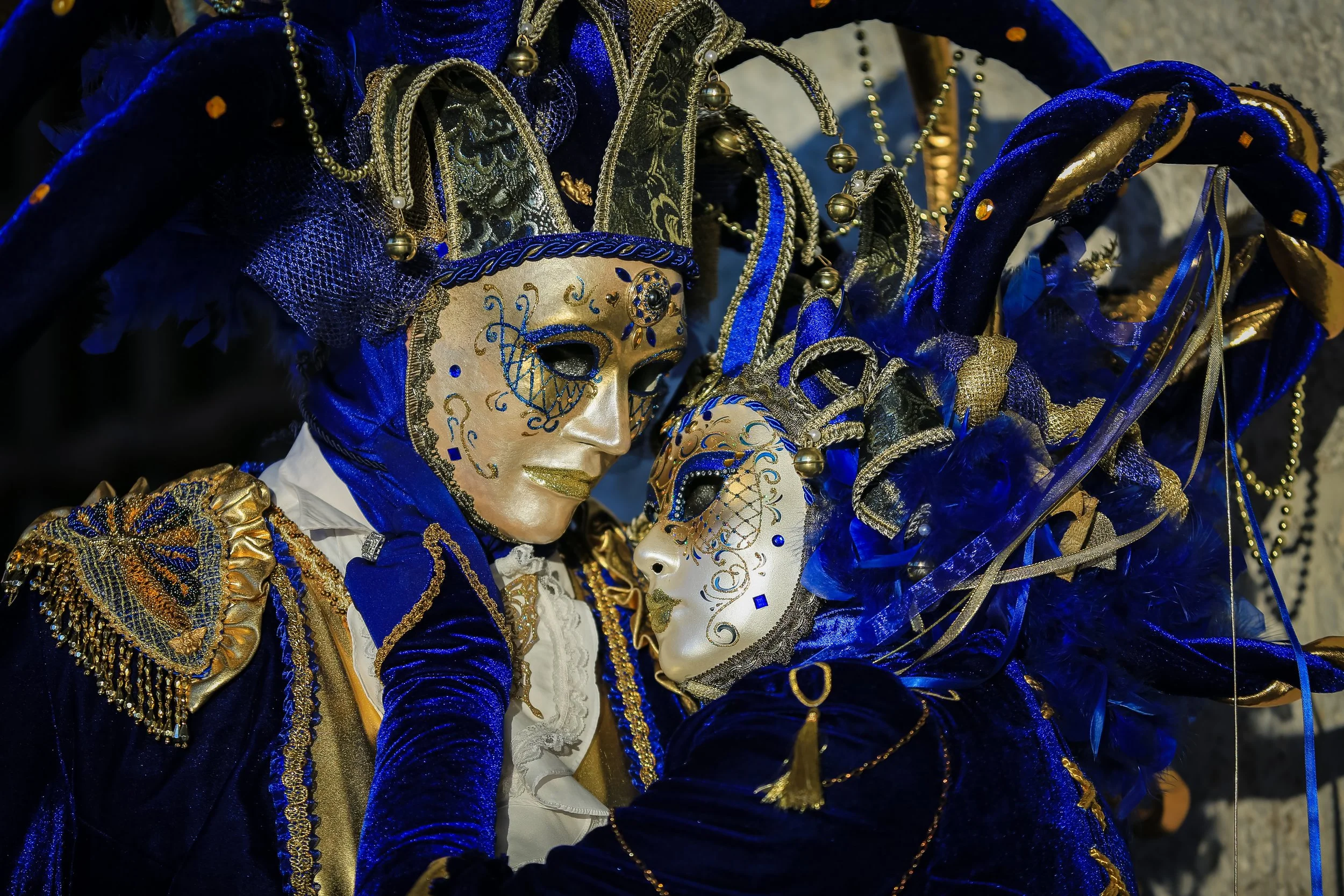
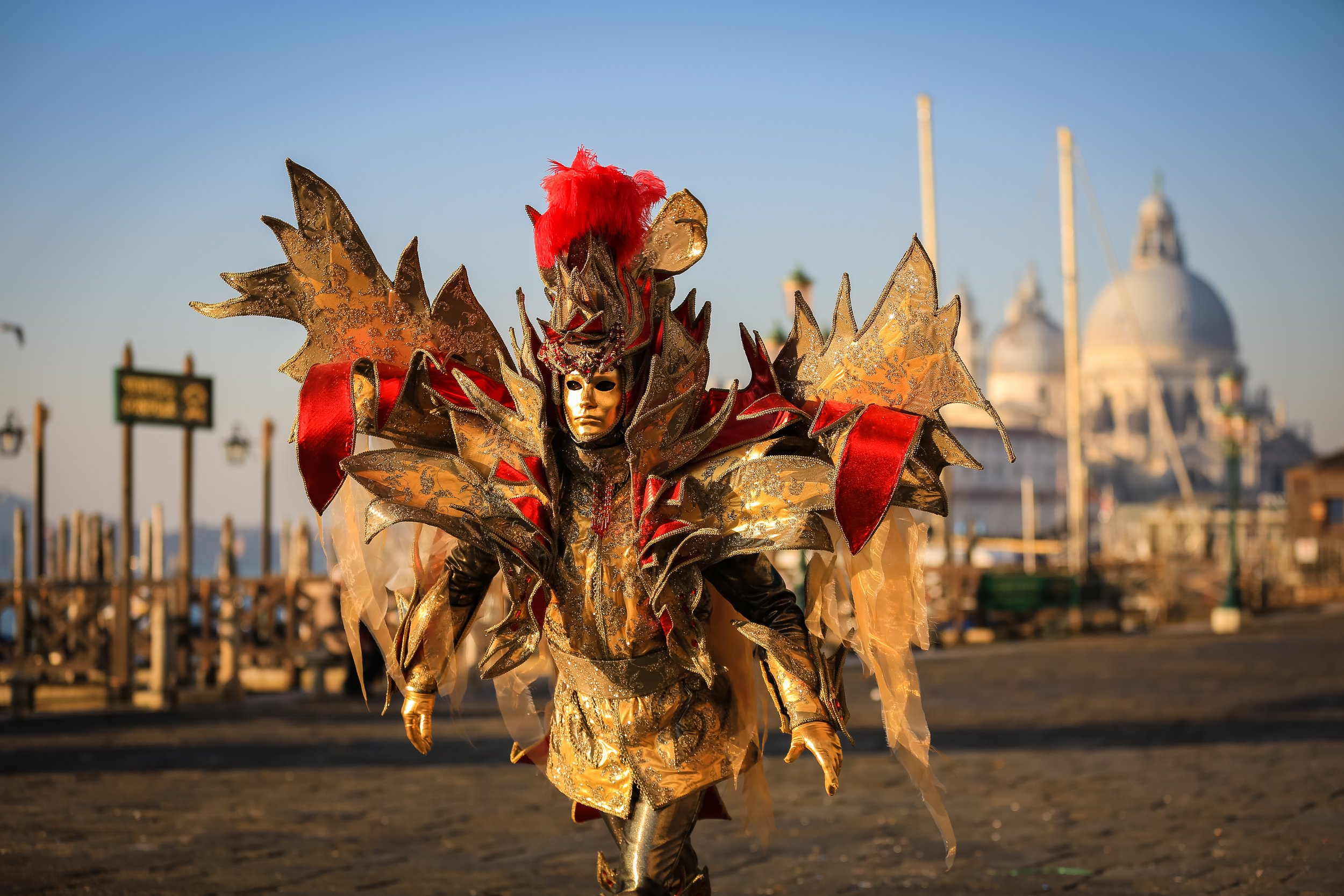
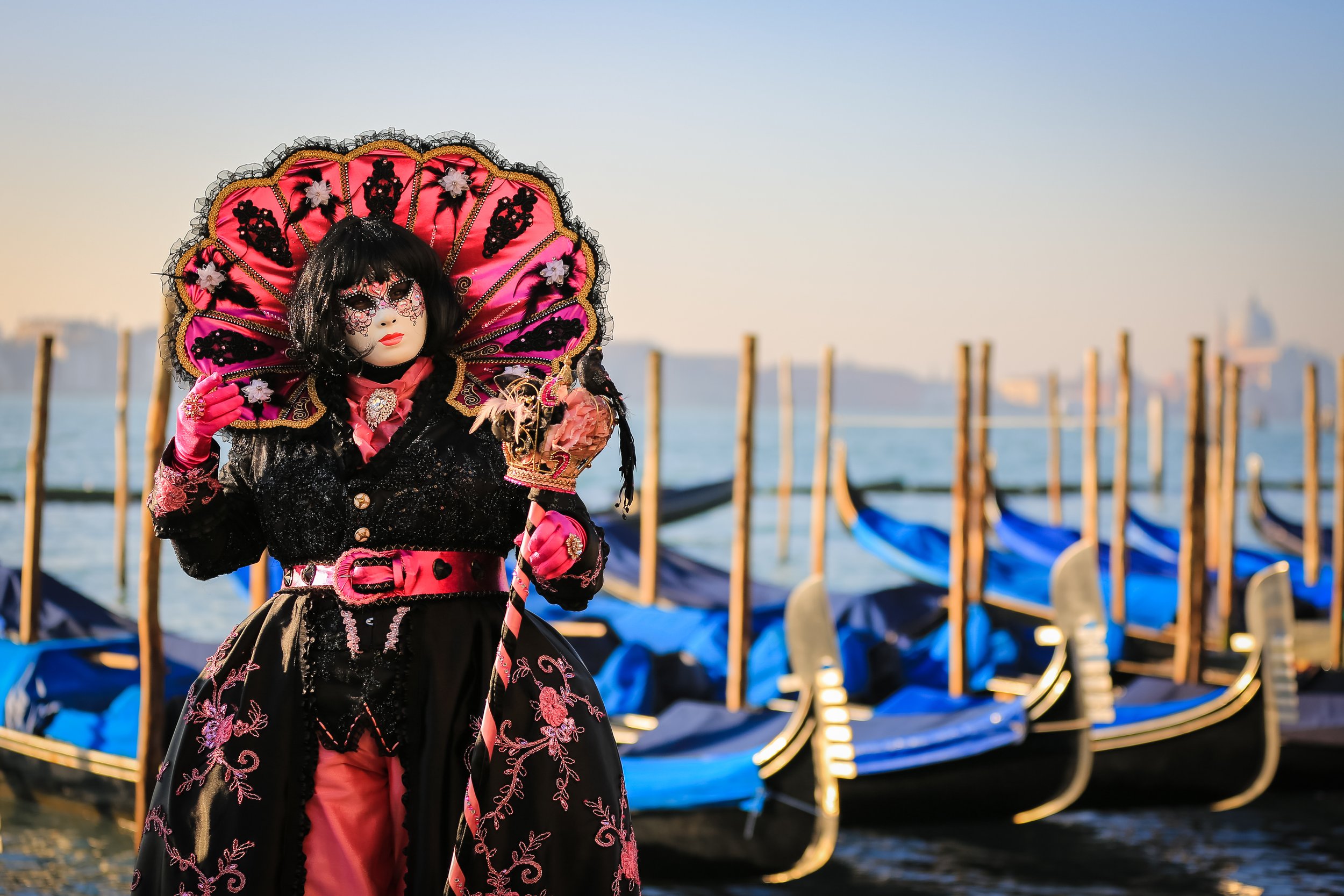
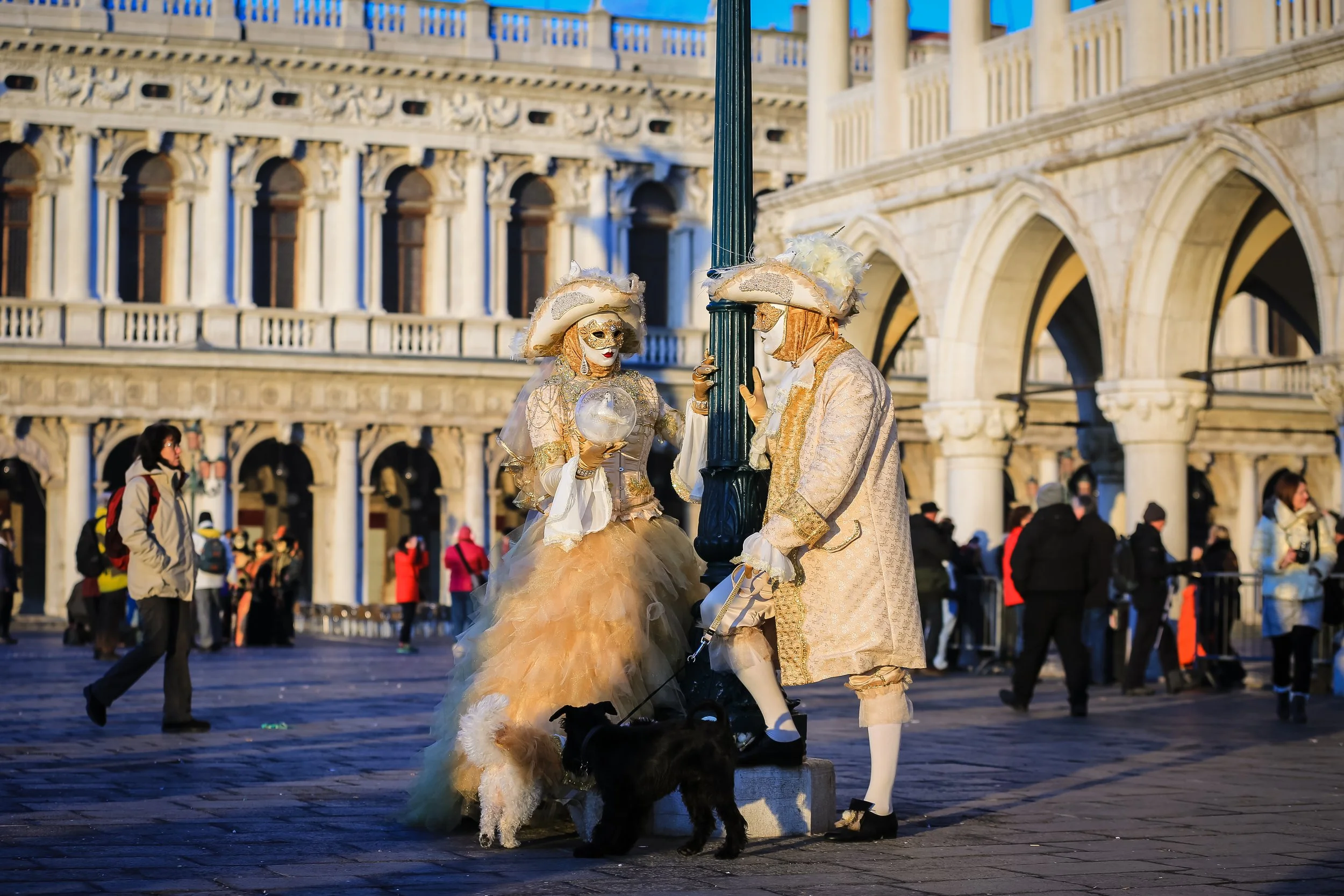
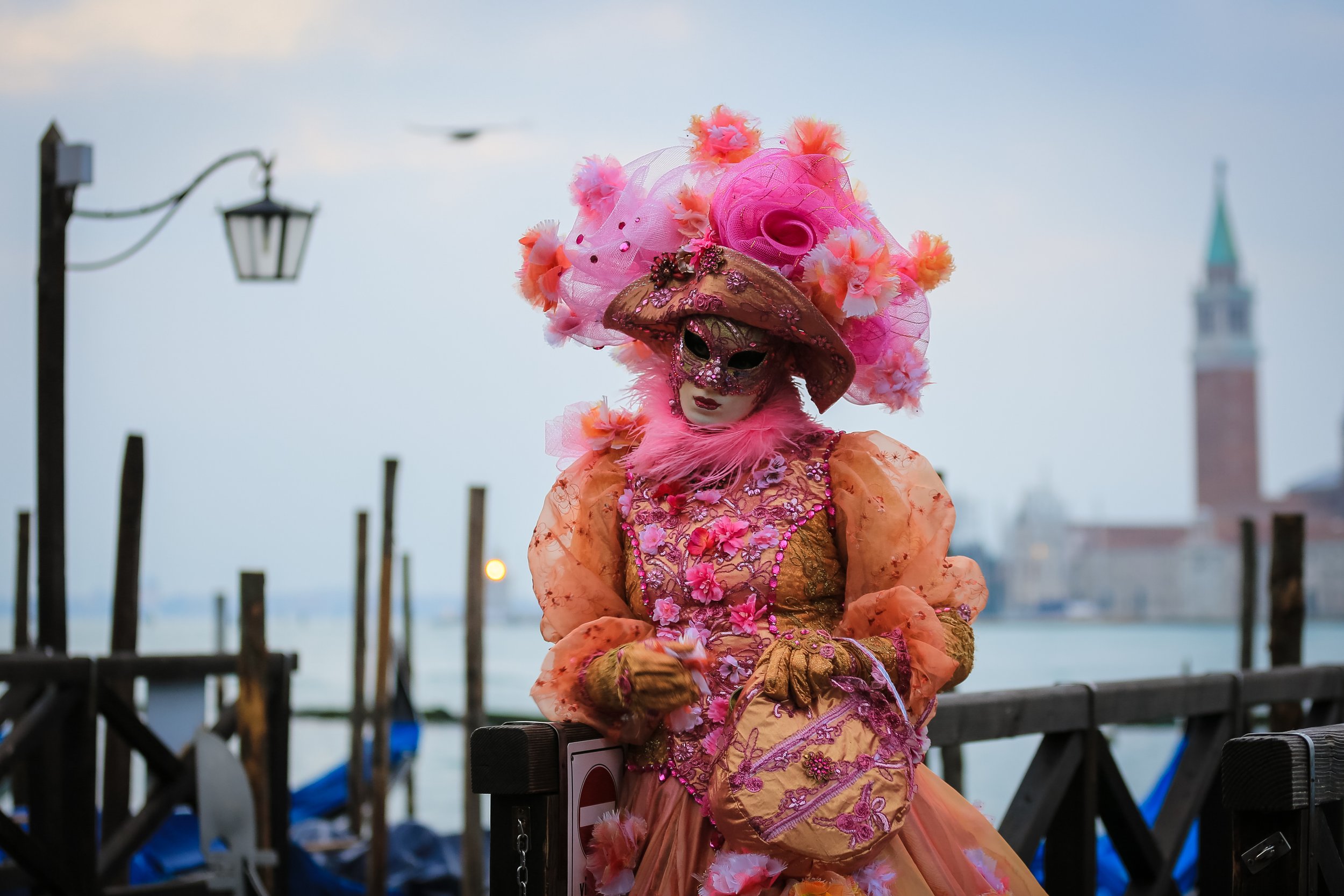
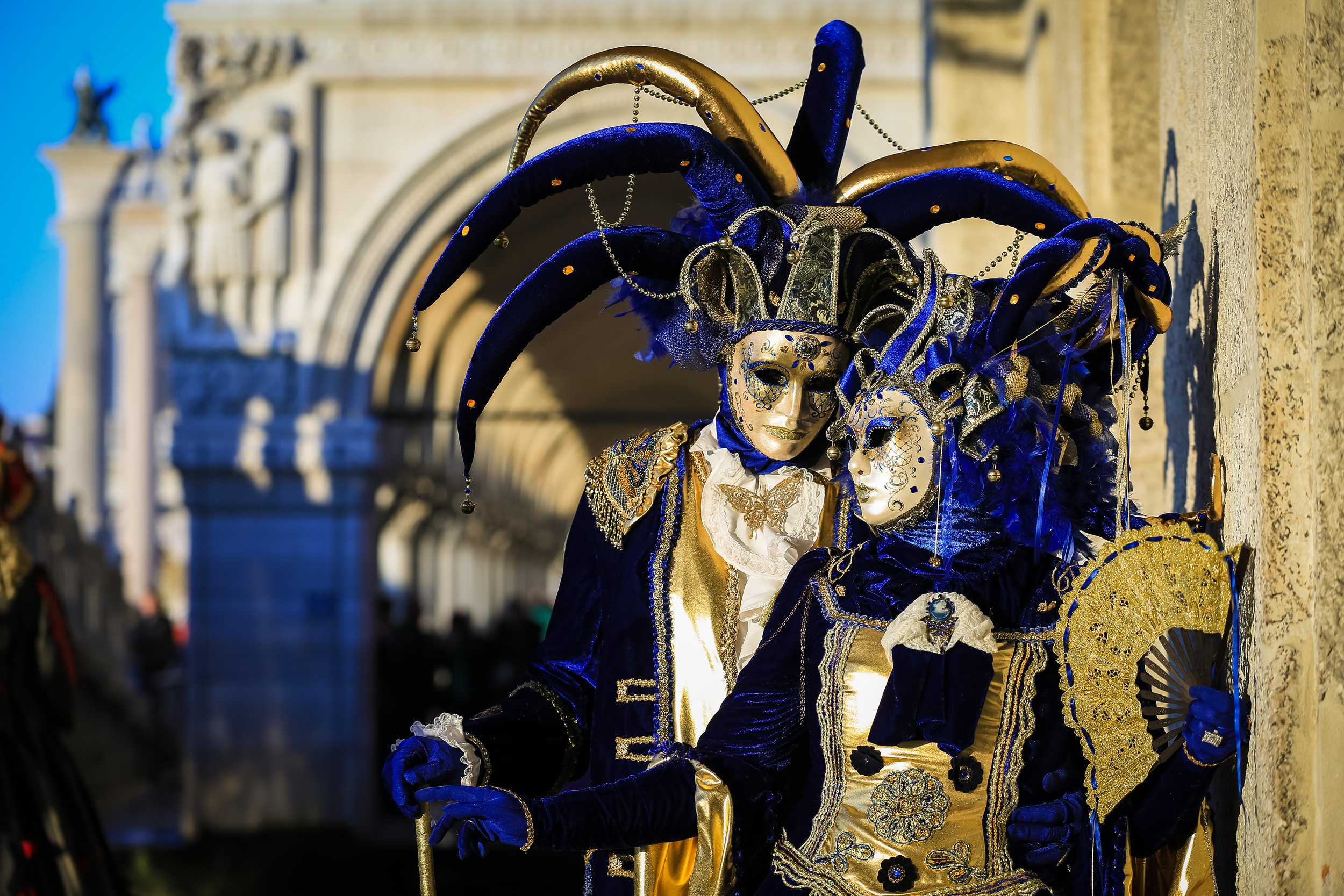
The Carnival of Venice or Carnival di Venezia is an annual festival in Venice. The Carnival ends with the Christian celebration of Lent, 40 days before Easter on Shrove Tuesday (Mardi Grass, Pancake Tuesday). The festival is well known for its elaborate masks and costumes.
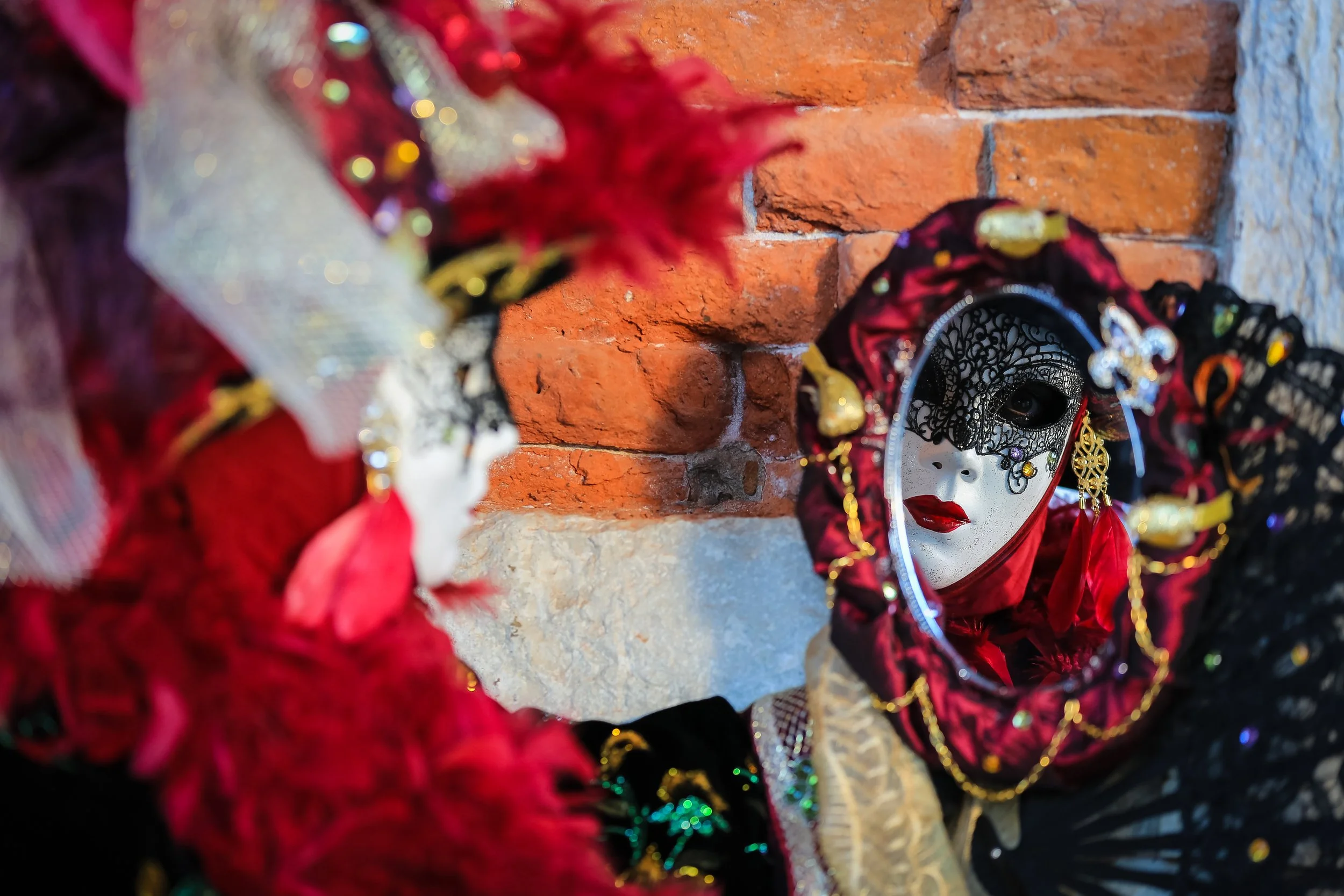
It is said that the Carnival of Venice started from a victory of the Serenissima Repubblica against the Patriarch of Aquileia in 1162. In honor of the victory, people started to dance and met up in San Marco Square. It became official in the Renaissance. Under the rule of the King of Austria the festival was outlawed in 1797 and the use of masks became forbidden. The Carnival returned in 1979 as the Italian government decided to bring back the history and culture of Venice.
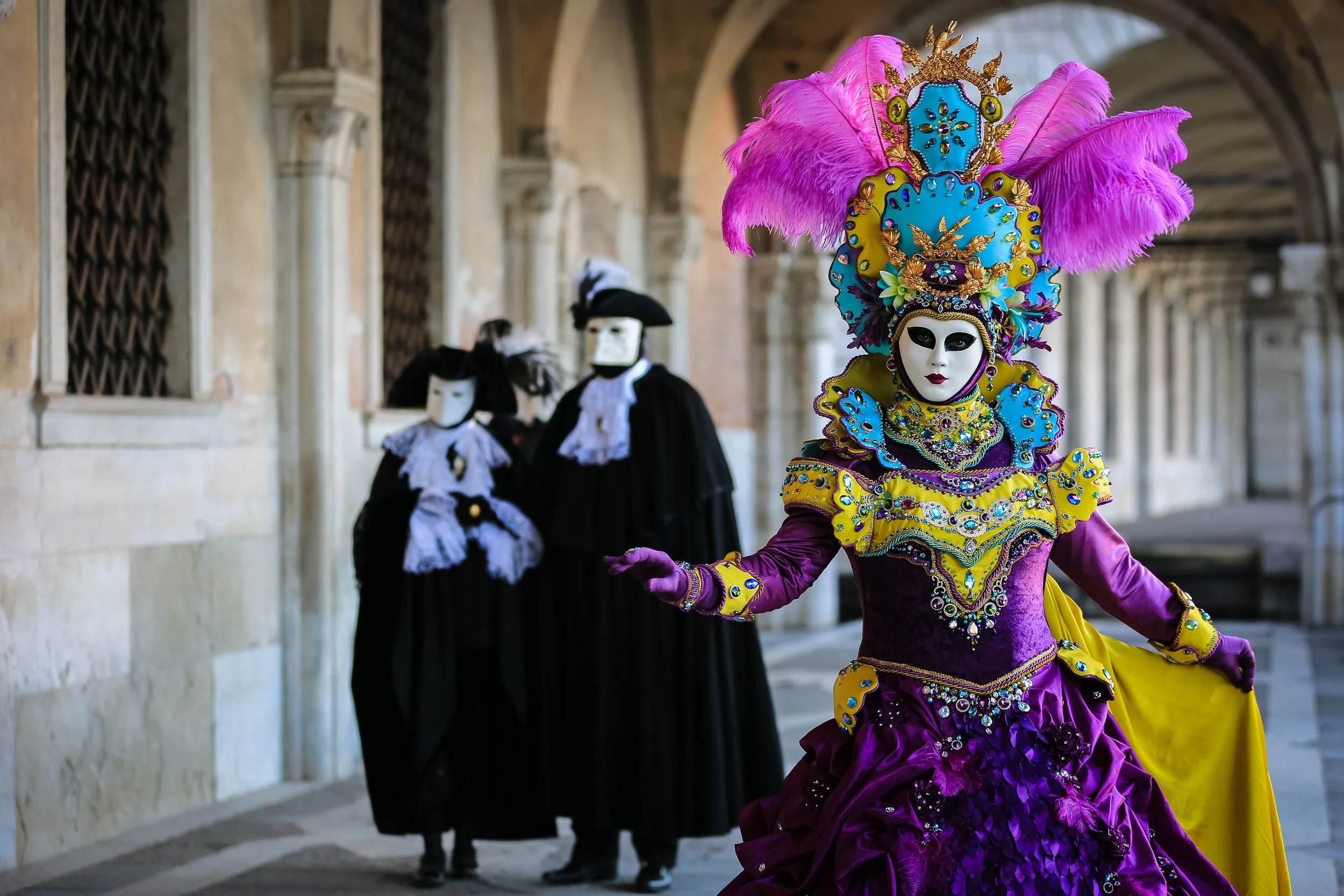
Masks have always been an important feature of the Venetian Carnival. Traditionally people were allowed to wear them between the festival of Santo Stefano (St Stephens Day on 26th December) and the start of the Carnival season at midnight of Shrove Tuesday.
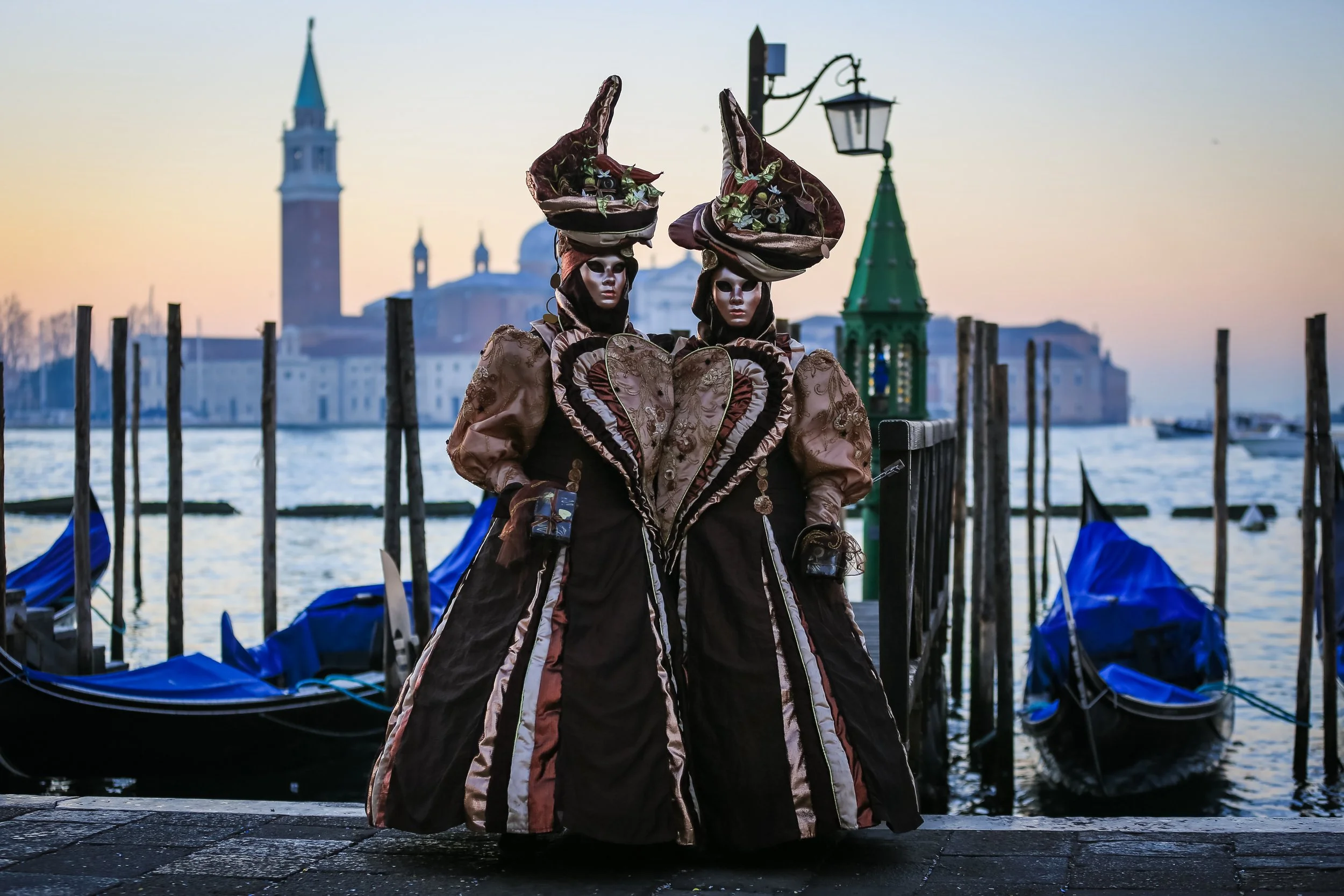
The Venice Carnival traces its origins to the Middle Ages, blossoming into a city-wide spectacle by the 12th century. Initially a time for social levelling and public revelry before Lent, the carnival allowed Venetians to conceal identity and class behind masks and elaborate costumes. Its heyday came in the 17th and 18th centuries, when masked balls, theatre, music and pageantry drew visitors from across Europe and cemented Venice’s reputation for opulence and theatricality.
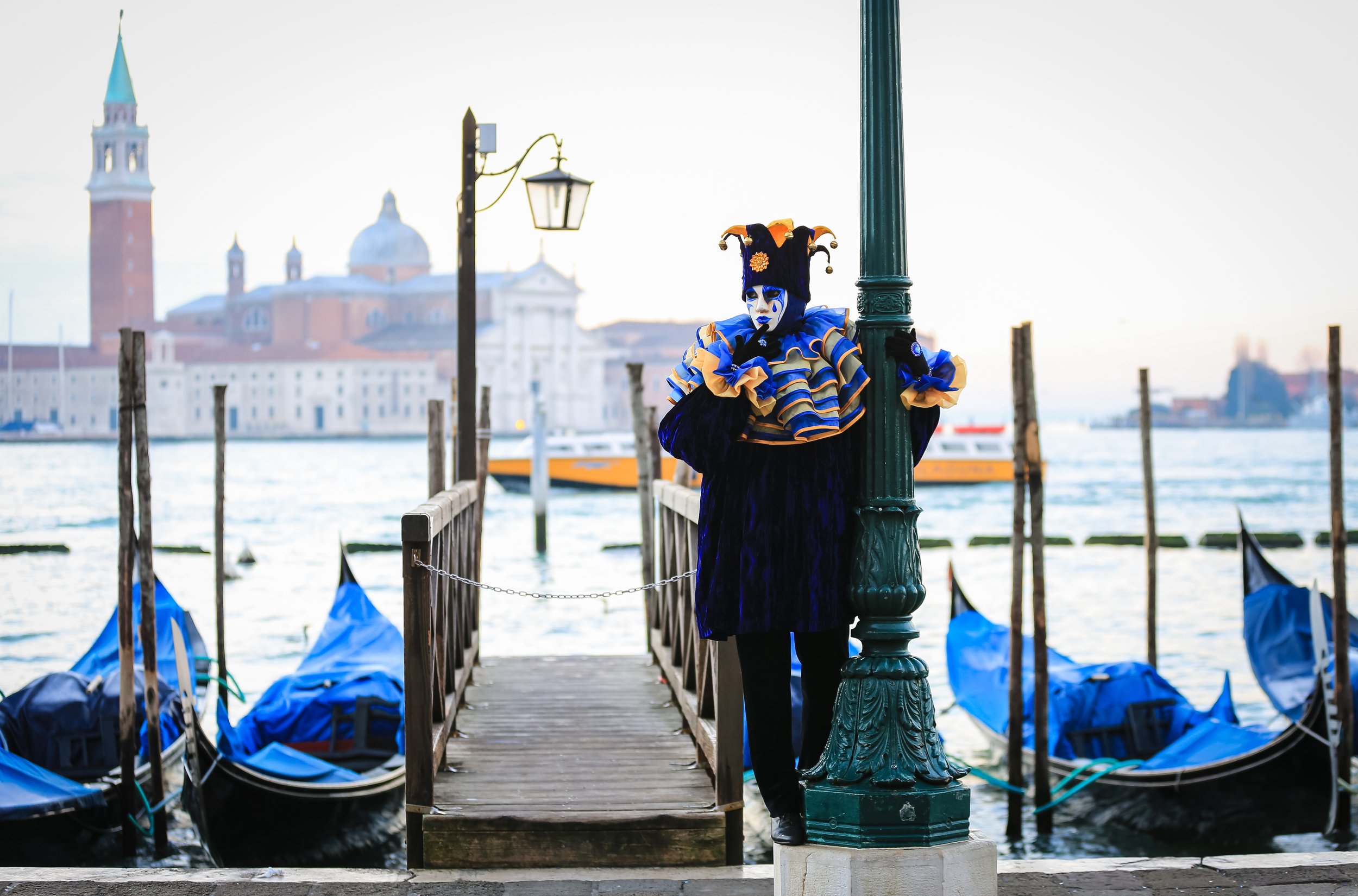
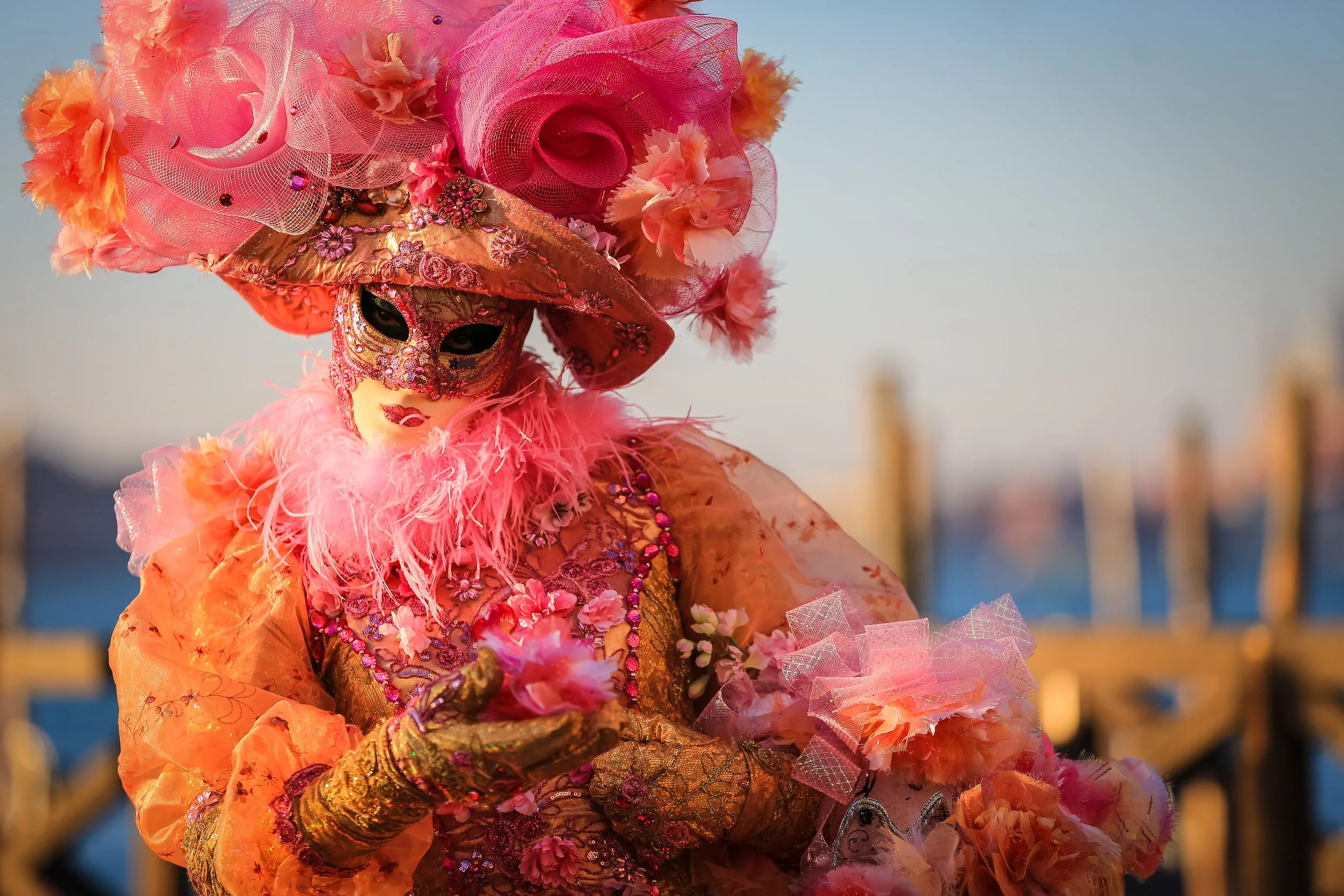
Following the fall of the Venetian Republic in 1797, carnival celebrations largely disappeared under Austrian and Napoleonic rule and were formally suppressed in the 19th century. The festival was revived in the late 20th century as part of a cultural restoration, growing into the internationally celebrated event it is today. Modern Carnevale di Venezia blends historical costume traditions and contemporary performance, offering a living link to Venice’s past while attracting visitors who come to admire its masks, baroque pageantry and timeless sense of mystery.
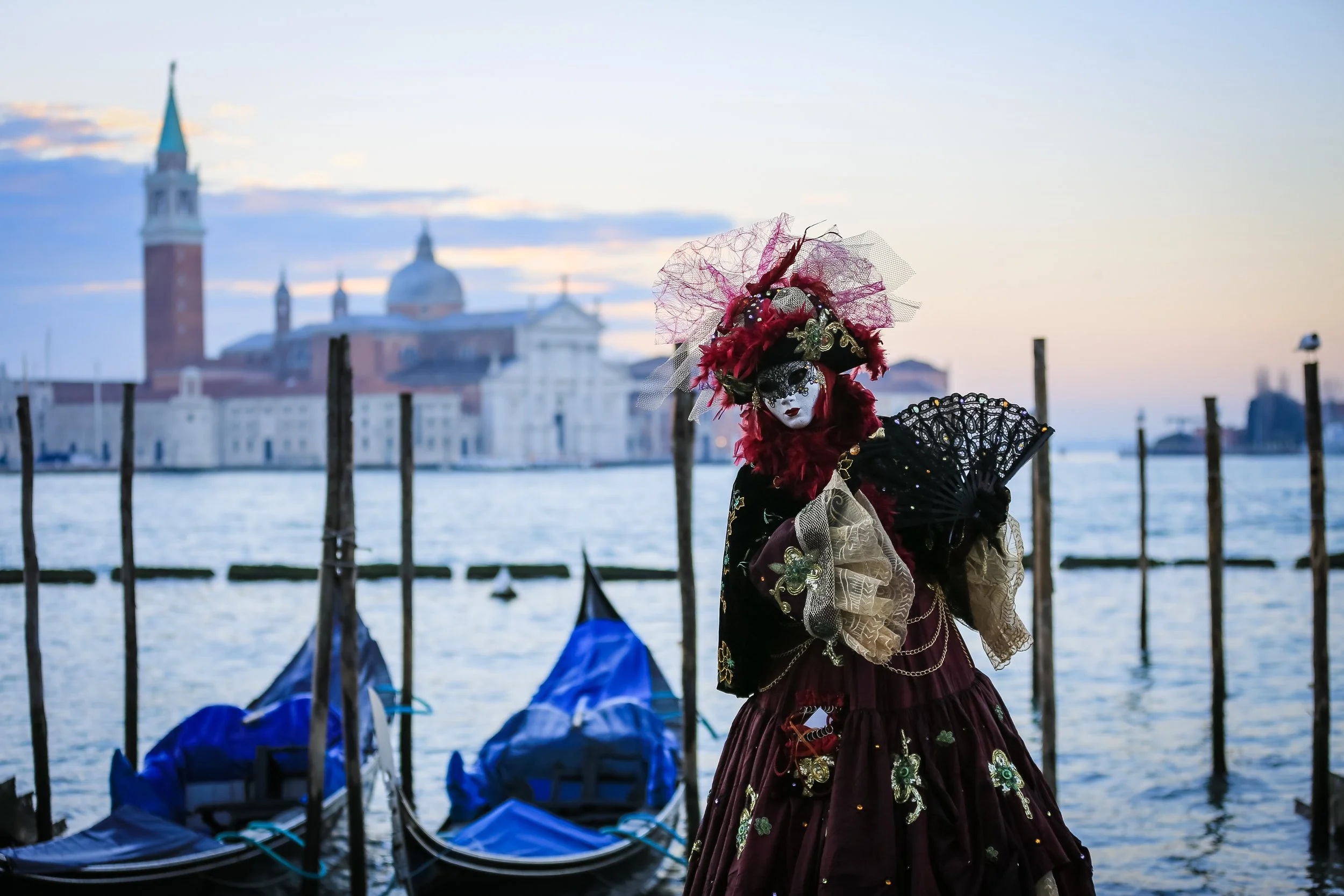
The Venice Carnival is a long‑running festival of masks, spectacle and social freedom. From the Middle Ages and peaking in the 17th–18th centuries, it used masks and rich costumes so people of different classes could mingle anonymously. Common masks include the bauta - a white chinless mask with a tricorn hat, the volto - full‑face mask and the Moretta - a small oval mask once worn by women. Costumes echo historic Venetian fashion—brocades, velvet cloaks, lace collars and embroidered robes—often with fans, canes and feathers.
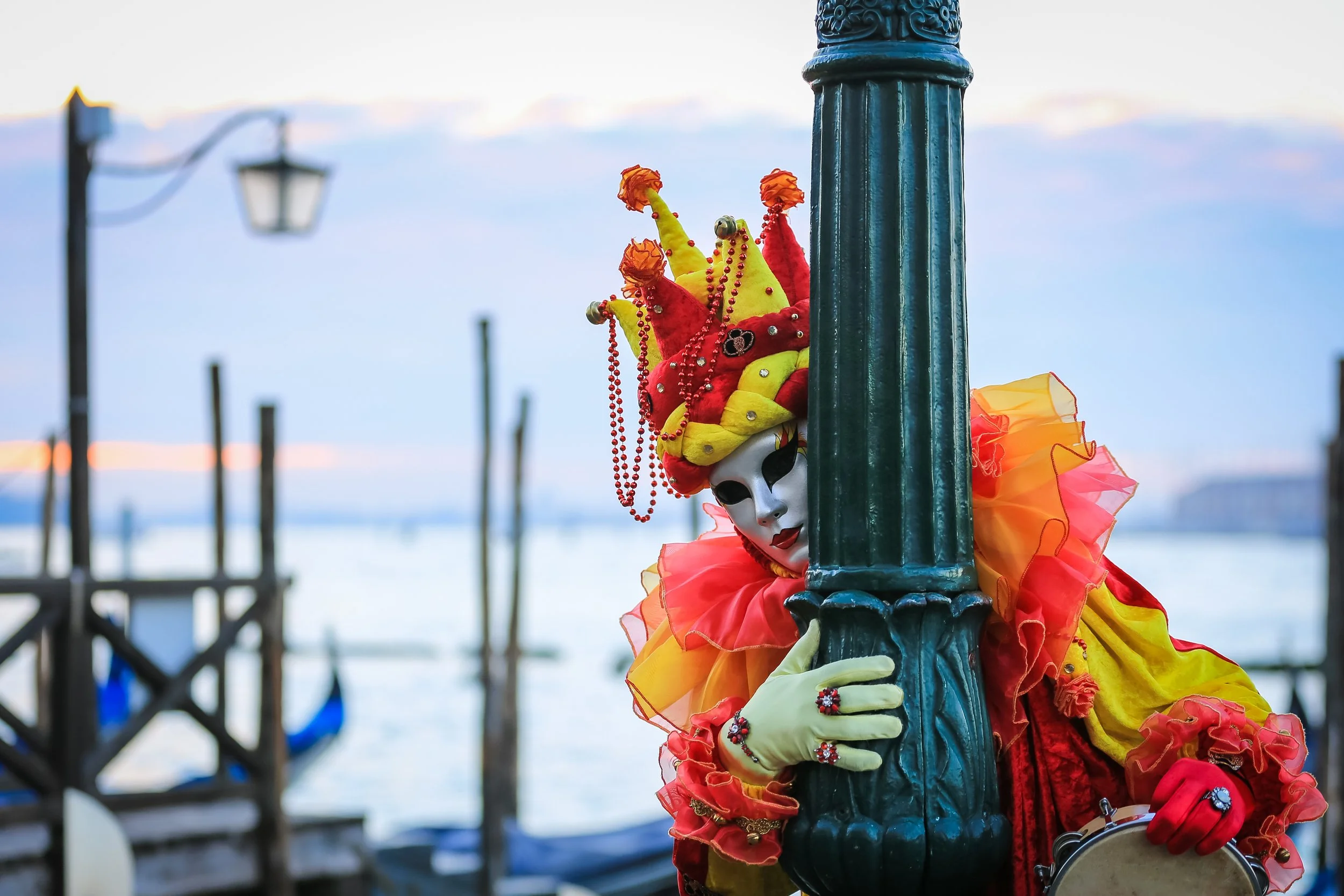
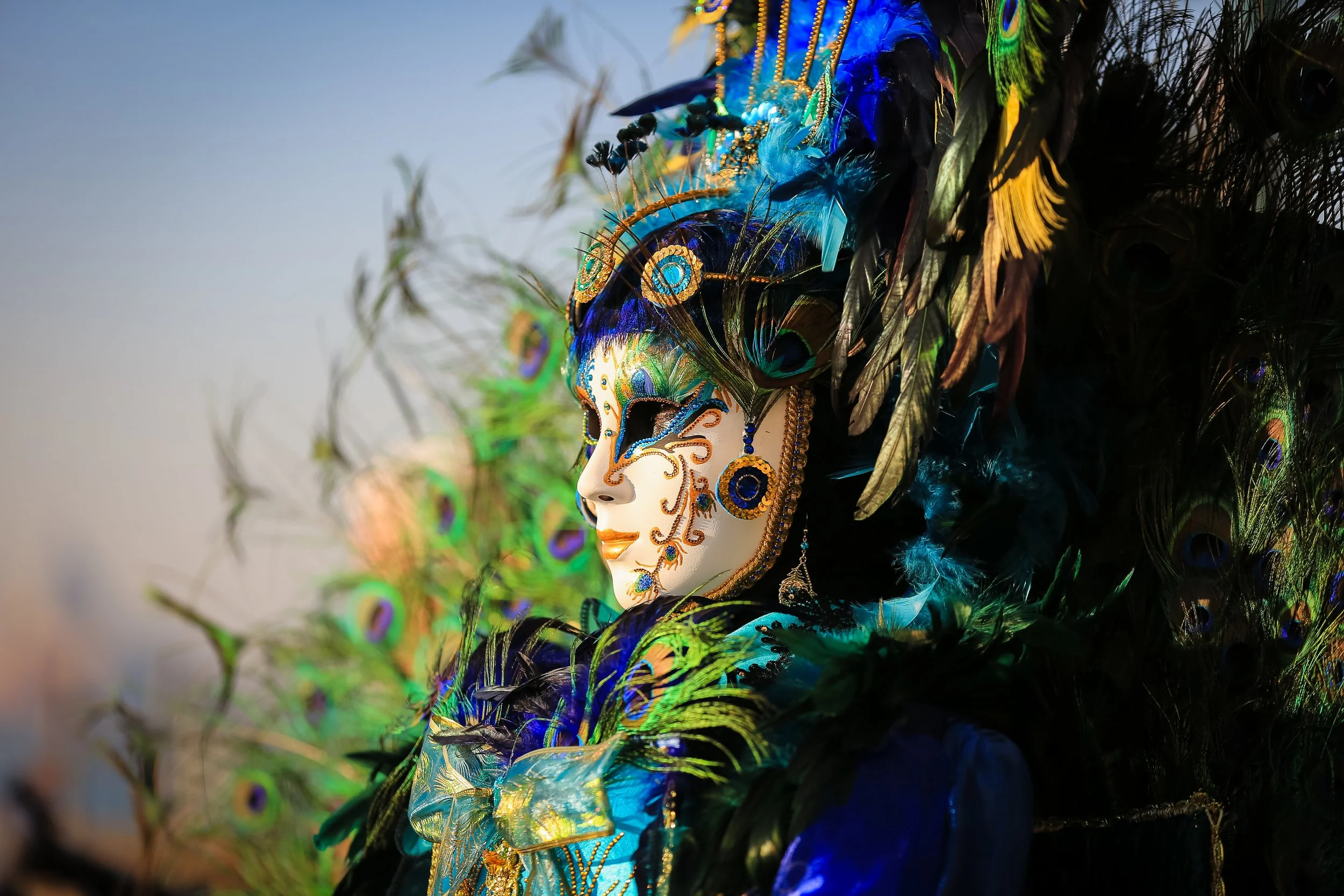
The Carnival mixes Baroque lavishness with theatrical showmanship to celebrate artistry, secrecy and a playful break from daily identity. Today it continues with masked balls, parades and performances, keeping Venice’s traditions alive and welcoming visitors to join in.
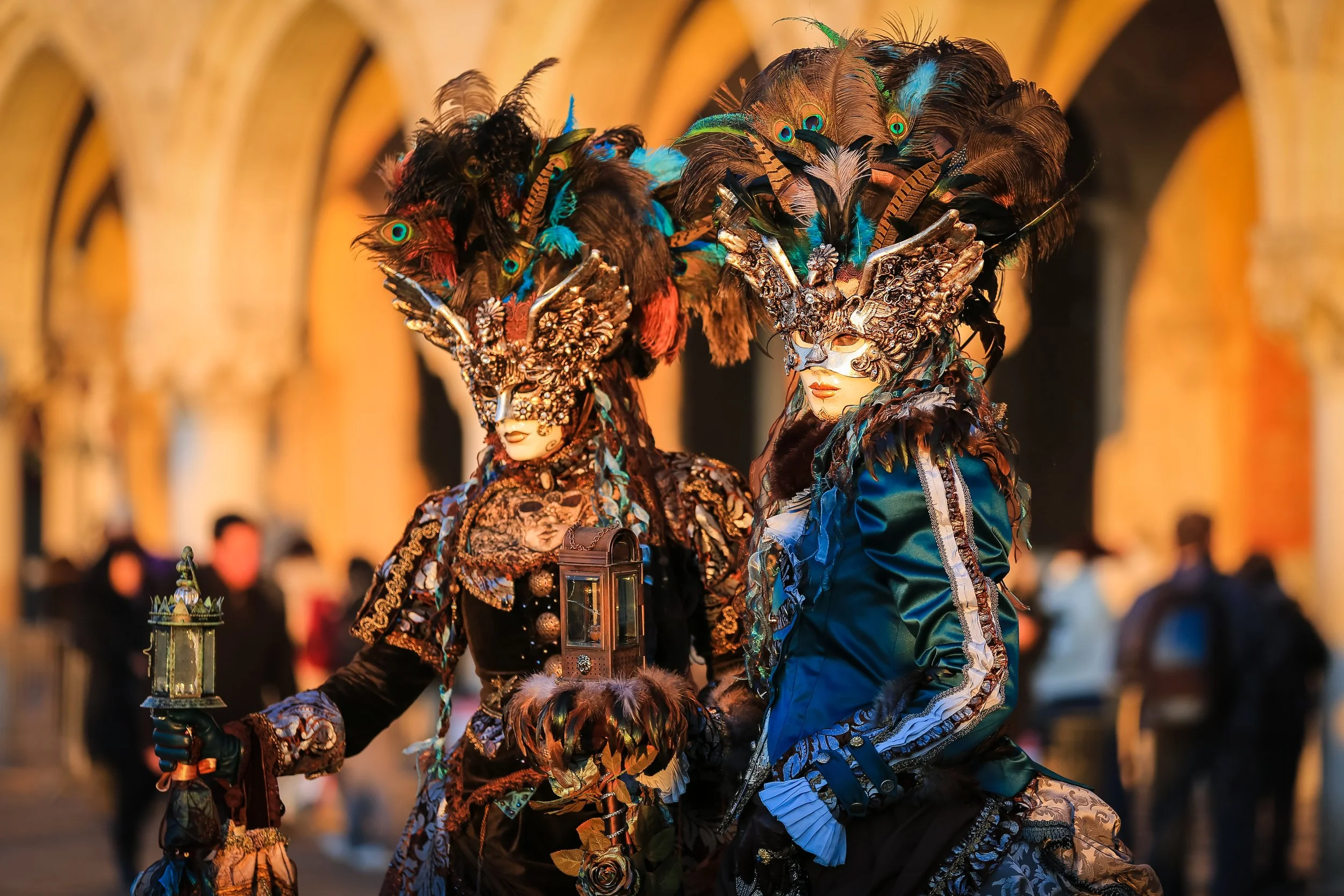
Here are some of the most beautiful and incredible handcrafted masks and costumes I have ever seen. The details are just amazing and a BIG Thank You to the wonderful models, who coming out every day and posing for photos. You are all amazing!
Will I head back next year? You bet.